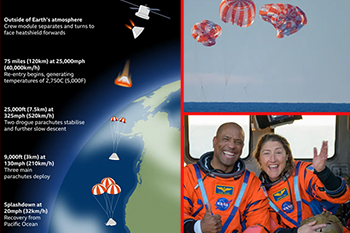
හඳට ගිය අය පොළොවට ආ හැටි

0
6

‘Artemis II’ මෙහෙයුම යටතේ ඉතිහාසගත චන්ද්‍ර මෙහෙයුමක නිතර වූ ගගනගාමීන් සිව්දෙනා සිය සඳ ගවේෂණය සාර්ථකව නිමාකර මේ වනවිට පෘථිවියට පැමිණ සිටියි.

ගගනගාමීන් රැගත් ඔරායන් යානය මෙරට වේලාවෙන් අද (11) අලුයම 5.30ට කැලිෆෝනියාවේ සැන් ඩියාගෝ වෙරළට ඔබ්බෙන් වූ පැසිෆික් සාගරයට ආරක්ෂිතව ගොඩ බස්සවනු ලැබීය.

මෙම ඉතිහාසගත මෙහෙයුමේදී ගගනගාමීන් රැගත් යානය නැවත පෘථිවියට පැමිණීම පිළිබඳ සටහනක් නාසා ආතනය විසින් මේ වනවිට ප්‍රකාශයට පත්කර ඇත.

සැතපුම් 75 ක් (කිලෝමීටර් 120) ඉහළදී:

පැයට සැතපුම් 25,000 ක (පැයට කිලෝමීටර් 40,000) වේගයෙන් යානය වායුගෝලයට ඇතුළු විය. මෙහිදී ඇතිවන අධික වායු ඝර්ෂණය නිසා යානයේ උෂ්ණත්වය සෙල්සියස් අංශක 2,750ක් දක්වා ඉහළ ගොස් ඇත.

අඩි 25,000 ක් (කිලෝමීටර් 7.5) ඉහළදී:

යානයේ වේගය පැයට සැතපුම් 325 දක්වා අඩු විය. මෙහිදී යානය ස්ථාවර කර ගැනීමට සහ වේගය තවත් අඩු කිරීමට පැරෂුට් දෙකක් (Drogue parachutes) විවෘත විය.

අඩි 9,000 ක් (කිලෝමීටර් 3) ඉහළදී:

වේගය තවත් අඩු වී (පැයට සැතපුම් 130), ප්‍රධාන පැරෂුට් තුනක් විවෘත විය.

මුහුදට පතිත වීම (Splashdown):

අවසානයේ පැයට සැතපුම් 20 ක පමණ ඉතා අඩු වේගයකින් යානය පැසිෆික් සාගරයට ආරක්ෂිතව පතිත වේ. ඉන්පසු නාවික හමුදා කණ්ඩායම් මගින් යානය සහ ගගනගාමීන් මුදාගනු ලබයි.

මෙය සඳ වටා ගොස් නැවත පැමිණෙන යානයක් ඉතා අධික වේගයකින් සහ උෂ්ණත්වයකින් ආරක්ෂා වී පොළොවට එන ආකාරය පෙන්වන තාක්ෂණික සටහනකි.
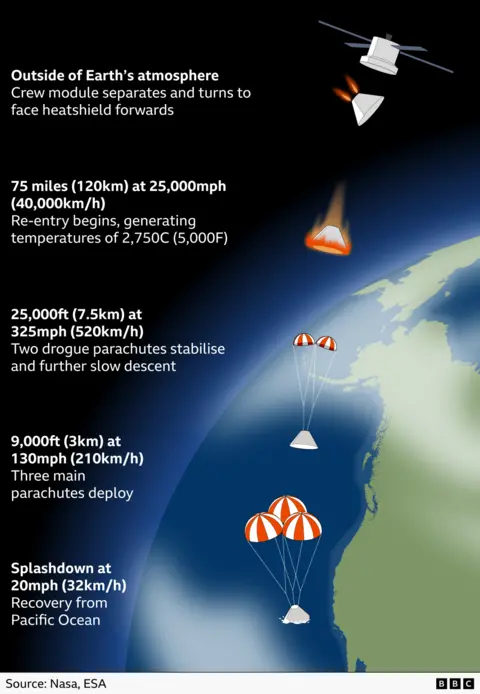
 

Vertical infographic illustrating the stages of the Orion crew module’s return to Earth. The dark background represents space, with Earth curved on the right, showing ocean and coastline below.
At the top, outside Earth’s atmosphere, the Orion crew module separates from the rest of the spacecraft and rotates so its heatshield faces forward. Small flames appear behind the module to indicate orientation manoeuvres.
Lower down, at an altitude of 75 miles, or 120 kilometres, and a speed of 25,000 miles per hour, or 40,000 kilometres per hour, re entry begins. The crew module is shown glowing orange, surrounded by a halo of heat, with text noting temperatures of up to 2,750 degrees Celsius, or 5,000 degrees Fahrenheit.
Further down, at 25,000 feet, or 7.5 kilometres, and slowing to 325 miles per hour, or 520 kilometres per hour, two small drogue parachutes deploy above the capsule to stabilise and slow the descent.
At 9,000 feet, or 3 kilometres, and 130 miles per hour, or 210 kilometres per hour, three large orange and white main parachutes open fully, spreading wide above the capsule.
At the bottom, the capsule descends gently under the parachutes and splashes down in the Pacific Ocean at about 20 miles per hour, or 32 kilometres per hour. Text indicates the crew will be recovered from the ocean. The source is credited to Nasa and ESA

Saru News

LEAVE A REPLY

Please enter your comment!
Please enter your name here